
23
Jul

Date
9 July 2026
Author
Greg Eden
Estimated reading time
7 minutes
If you’ve ever tried to reverse into a tight berth on a windy day, you’ll appreciate how much easier life could be with a stern thruster. At JPC Direct, we are the UK’s East Coast agents for Norwegian thruster manufacturer, Sleipner Motor. We help boat owners choose and install Sleipner stern thrusters that make manoeuvring smoother, docking easier, and close-quarters handling far less stressful.
This guide explains the installation process step by step, who it’s for, and how to choose the right Sleipner stern thruster for your boat. It’s written for owners who want a neat, reliable installation and a better feel at the helm without getting lost in too much technical jargon.
A stern thruster helps push the back of the boat sideways, giving you much more control when manoeuvring astern or positioning the boat in tight spaces. It’s especially useful on longer boats, heavier boats, or craft with a high windage profile.
For many boat owners, the biggest benefit is confidence. Instead of fighting the boat, you can make small adjustments and bring it into place more smoothly.
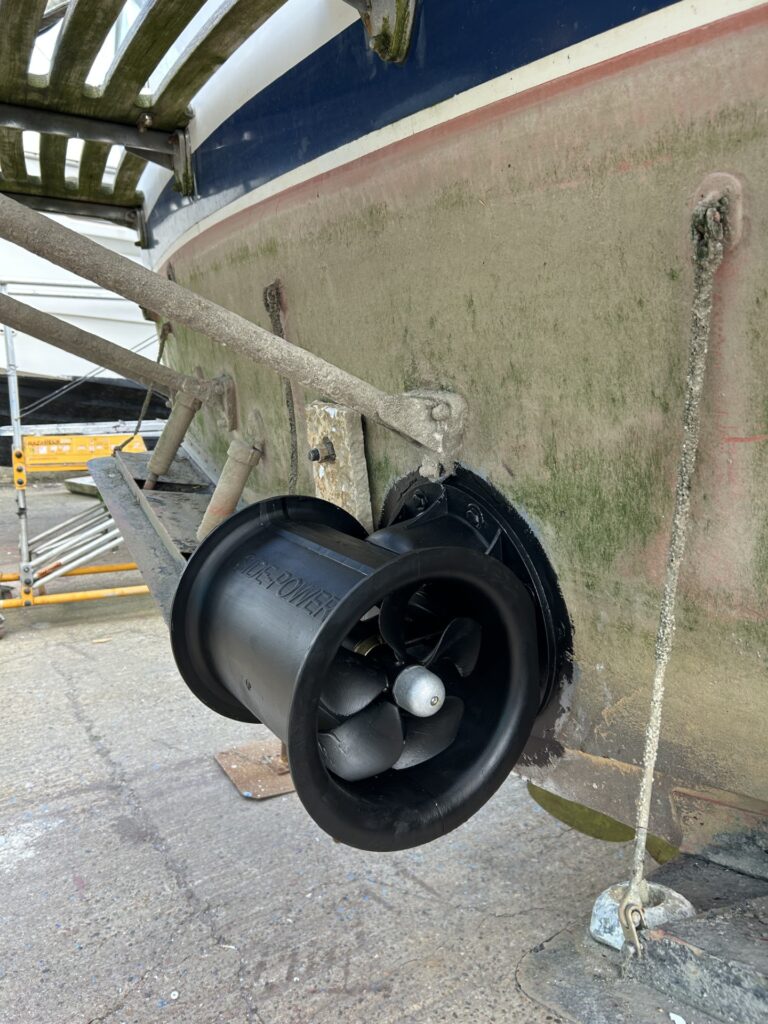
Before any cutting or fitting begins, we first make sure the thruster is suitable for the boat. That means looking at the hull shape, available stern space, boat length, and how much control the owner wants.
This is important because a thruster that is too small may not give enough sideways force, while one that is too powerful may be unnecessary for the boat.
Once the right model has been selected, we mark out the best position on the stern. For best performance, Sleipner stern thrusters should be installed as deep on the stern as practical, while still allowing a proper, safe fit.
Getting this right helps the system work efficiently and keeps the installation clean and balanced.
The next stage is to cut the stern opening for the unit (SX Series) , or the stern tunnel (SE Series), and prepare the area for the thruster system. This must be done carefully so the unit sits correctly and the surrounding structure stays strong.
We always aim for a neat, well-sealed installation. That matters not just for appearance, but for long-term durability and performance too.
Once the opening is ready, the tunnel is fitted and sealed into place. The thruster assembly is then mounted so the mechanical parts align properly with the tunnel.
This step is one of the most important parts of the job. A precise fit helps reduce vibration, noise, and wear.
After the main unit is in place, the propellers are fitted according to the model specification. On some Sleipner stern thrusters, prop orientation is important, especially on twin-propeller or counter-rotating systems.
Getting the propellers fitted the right way round is essential for good thrust and predictable handling.
The next stage is wiring the thruster back to the control system at the helm. This includes the power supply, control wiring, and any relevant connectors or harnesses.
We keep this part tidy and secure, because good wiring is just as important as the mechanical installation. It helps the system respond properly when you need it.
A stern thruster is only useful if it’s easy to operate. That’s why we fit the joystick or control panel in a position that feels natural from the helm.
This gives you simple fingertip control when manoeuvring and makes the system feel like part of the boat rather than an afterthought.
Before we finish, we test the full installation carefully. That means checking the thruster response, control operation, alignment, and overall performance.
We also look for anything that might affect reliability, such as loose fittings, wiring issues, or excessive noise. The final test confirms everything is ready for use.
Sleipner offers several stern thruster options, and the right choice depends on boat length, weight, and how the vessel is used. As a general rule, smaller boats need less thrust, while larger or heavier boats need more power and sometimes twin-propeller or retractable systems.
| Thruster type | Typical boat size | Best for | Notes |
| SX35 / SE30-class compact stern thruster | Around 20–30 ft | Smaller cruisers and lighter boats | Good for owners who want modest manoeuvring help without over-specifying the system. |
| SX50 / SE40–SE60 range | Around 25–40 ft | Medium-sized leisure boats and cruisers | A strong all-round option for many family boats and canal or coastal craft. |
| SE80 / SE100 range | Around 35–50 ft | Heavier boats, larger cruisers, more windage | Better for boats that need more thrust and stronger stern control. |
| SE130 and above | Around 45 ft plus | Large, heavier, or high-windage boats | Best for bigger craft where extra control is needed at low speed. |
A stern thruster helps move the back of the boat sideways, making it easier to reverse, berth, and position the vessel accurately. It is especially useful in windy conditions or tight marina spaces. Many owners find it dramatically improves confidence when manoeuvring astern.
The right model depends on your boat’s length, weight, hull shape, and how much manoeuvring help you want. Smaller boats often suit compact models, while larger or heavier boats need more thrust. A proper assessment is the best way to choose correctly.
Yes, often it can, but the hull structure, available space, and condition of the stern all need to be checked first. Older boats may need more careful planning or preparation. A professional assessment helps make sure the installation is safe and practical.
That depends on the boat and the complexity of the job. A straightforward stern thruster installation may take a day or two, while more involved fits can take longer. Cutting, sealing, wiring, and testing all need to be done carefully for the best result.
Yes, because stern thruster installation involves accurate cutting, careful sealing, correct alignment, and safe electrical work. A professional fit helps reduce the risk of leaks, poor performance, and wiring issues. It also gives you a cleaner finish and better long-term reliability.
At JPC Direct, we supply and fit Sleipner thrusters for boat owners who want more control and less stress when handling their vessel. We keep the process straightforward, explain the options clearly, and focus on a tidy, reliable installation.
If you’re thinking about adding a Sleipner stern thruster, we can help you choose the right setup for your boat and make sure it’s installed properly.

23
Jul
20
Jul

16
Jul

09
Jul

08
Jul

06
Jul

13
Apr

09
Apr

15
Feb
06
Jan
28
Sep
22
Sep
18
Jul

14
Jul

14
Jul
14
Jul
14
Jul

14
Jul

08
Jul

05
Jul

11
Mar
15
Sep

25
Aug

19
Aug
29
Jul